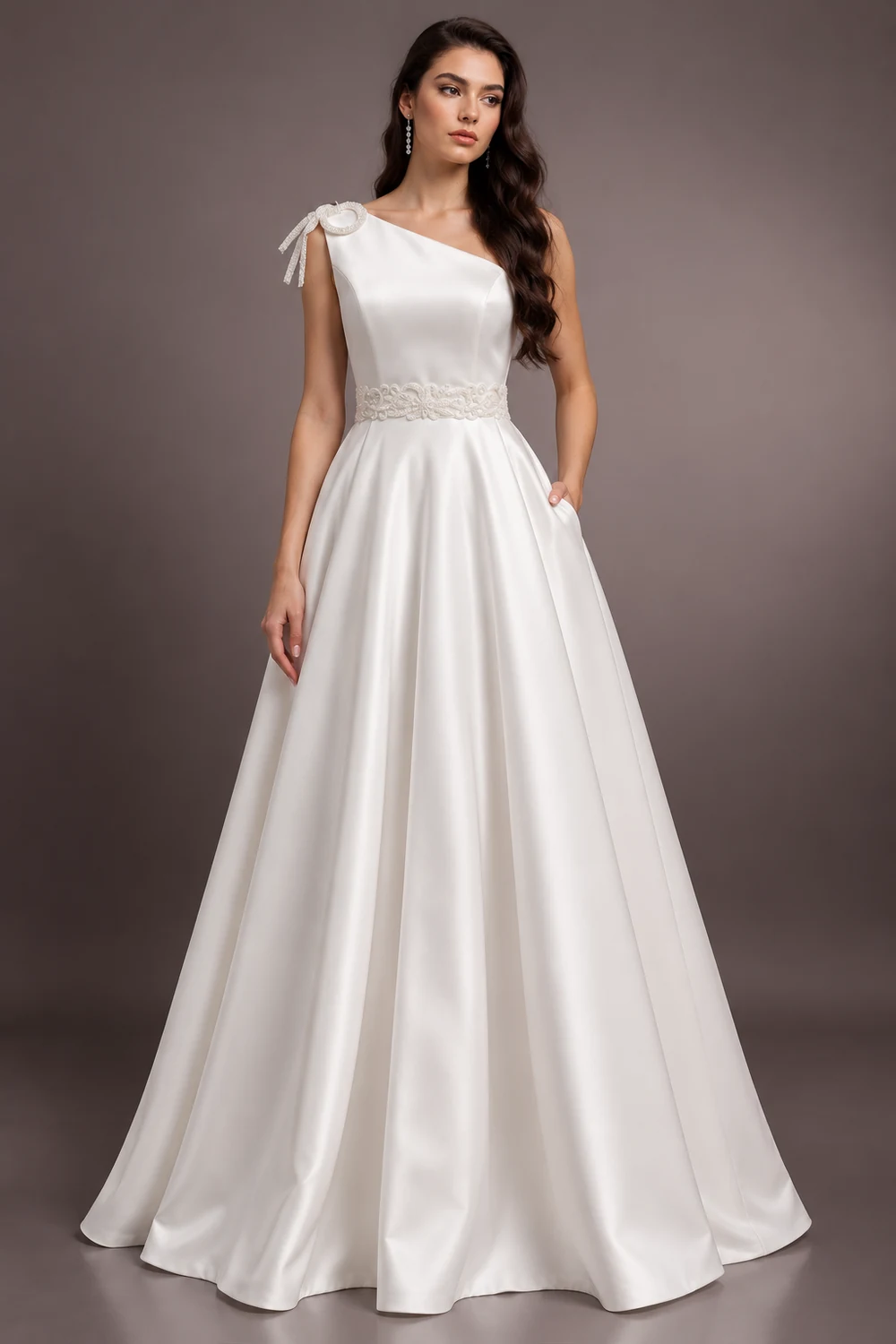
In photographs, a dress is seen standing still, from the front. On the wedding day, though, it has to get in and out of the car, go down a few steps, sit at the table and stay comfortable after hours of dancing. That is why choosing a silhouette is easier if you think first about how you will move through the day, and only then about the name of the cut.
Start with a list of the day’s moments
Take a sheet of paper and write down, in order, everything you will be doing in the dress: climbing stairs or a slope at the ceremony, walking on gravel or grass, sitting in the car, a waltz or a livelier dance, sitting at the table, getting up dozens of times to greet your guests. Underline whatever will take up the most time. If you will dance a little and sit a lot, comfort when seated matters more than a spectacular train. If the party is long and lively, you need freedom of movement and a dress you can lift easily.
This is not a fixed rule but a filter. Once you know what matters to you, each silhouette reads differently.
A-line: room to stride
An A-line cut starts at the waist or the bust and widens gradually towards the hem, without catching at the knees. Your stride has room, and the skirt doesn’t need smoothing down by hand every time you turn. If you have no clear preference, it is a cut you can start from and then refine.
One example from our collection is the Love A41 wedding dress: an A-line in duchess taffeta with a one-shoulder bodice and embellishment at the waist and shoulder, while the skirt has pleats and pockets. The current price is shown on the dress’s page; at the time of writing it is available in a size 38, and it can be made to measure in other sizes. Pockets are a detail about movement, not just looks: you have somewhere to keep a handkerchief or your phone, and your hand has a natural place to rest as you walk. At your fitting, gather the skirt in your hand, take a step up and see how far you can lift it without pulling on the bodice.
Empire: the fabric does the moving
With an empire cut, the line is gathered beneath the bust and the fabric falls freely from there. Nothing presses on the waist, and chiffon or another fluid fabric follows your step. We have covered this cut in detail in our guide to the empire wedding dress; here we are only interested in how it affects movement.
Love 324 is one example: full-length and empire-line, with a bodice of hand-embellished embroidery, a V-neckline, long chiffon flutter sleeves and a silk chiffon skirt. The current price is shown on the dress’s page, the size available at the time of writing is 50, and it can be made to measure in other sizes. Long chiffon and plenty of fabric around the arms feel quite different from a structured fabric: they move with you, but they can also catch on a chair or a glass. Try sitting down and standing up two or three times to see how the sleeves behave.
Princess: volume, space and a train
The wedding dress silhouette with the most dramatic presence on a staircase is the princess: a fitted bodice and a full skirt, often over a crinoline. From our collection, Lux 01 is a one-of-a-kind princess design with a train and a built-in crinoline, a sweetheart corset with hand-sewn beading, in off-white. The current price is shown on the dress’s page, and at the time of writing it is available in a size 36.
Volume needs space. At the car door, in a lift or between tables, you will need an extra moment. That doesn’t mean you can’t dance in it, only that it helps to know in advance how the skirt lifts, how far the crinoline spreads when you sit down, and whether the train can be bustled for the party. Ask and test rather than assume.
Mermaid: the cut follows the body
A mermaid dress follows the body to below the hip or the knee and then flares out. The effect is long and elegant, and your stride is naturally shorter. For the ceremony and the photographs it is a beautiful choice; for an evening of dancing, it is worth checking the details carefully.
- How long a stride can you take when walking normally?
- How do you sit down: do you need help, or a few extra seconds?
- How do you manage a step or a staircase with the skirt close around your legs?
- Where does the flared section begin, and can it move easily when you dance?
The answers to these questions differ from dress to dress, because they depend on the fabric, the cut and the way the flared section is constructed.
What to try at your fitting, whatever the silhouette
Try a few specific movements, in the shoes you will wear and with the right underwear, if you have already chosen it. Walk ten steps across the atelier, turn round sharply, raise your arms above your head, sit down on an ordinary chair rather than a comfortable fitting-room one, then stand up without using your hands. Take a few dance steps and ask someone to watch you from behind: how the skirt falls matters, not just how you look in the mirror.
Notice, too, where any tension appears: under the arm, at the waist, across the back when you lean forward. A dress that pulls at one point feels it far more after a few hours than in the first few minutes. Many of these things can be corrected with alterations, and what can be changed depends on the cut and the fabric; we have explained the limits in our article on wedding dress alterations. How long an alteration takes depends on what is being changed, so mention anything you notice from the outset, so that we know whether it is a small detail or a more substantial adjustment.
Choose the dress for the whole day
If the ceremony lasts ten minutes and the party seven hours, it may be worth designing the dress around the second part, letting its beauty at the altar come from detail and proportion rather than volume. If, on the other hand, the ceremony is the main event, you might accept a little more structure for the look you want. There is no universal answer, only the right balance for your day.
If you would like to see how these cuts behave on you, you can book a fitting and tell us briefly what your day looks like. We will start from the moments you have noted down and try on the dresses that suit them together.
TO BRING TO YOUR FIRST MEETING
- The images that inspire you, and your questions.
- A sense of the occasion and of what makes you feel comfortable.
- The details you would like to discuss with the atelier.