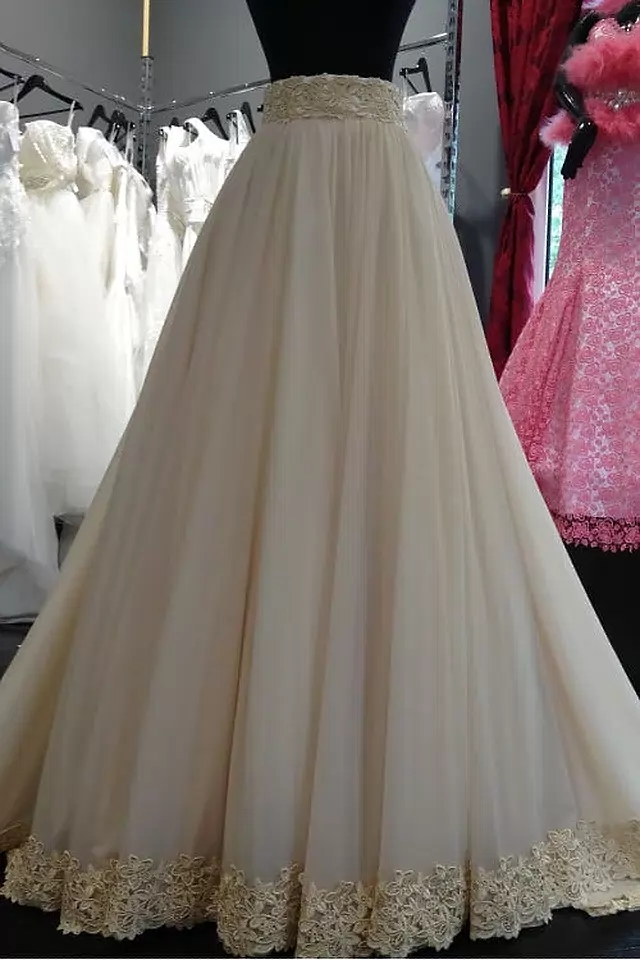
The hardest stain to remove from a wedding dress is the one you cannot see. Champagne, juice or the sugar from a dessert dries clear, and after a few months in the wardrobe it reappears as a yellowish-brown mark, exactly where it landed. That is why preserving a dress begins with what you do in the first few days after the wedding, not with where you put it.
The first few days after the wedding
Until the dress has been cleaned, it is not ready to be stored. Don’t put it straight into a garment bag, and don’t leave it draped over a chair for months. Remove any pins, clips or accessories that were attached temporarily, and lay it somewhere clean and well aired, out of the sun.
Before you take it to be cleaned, look over the whole dress in good light. Make a note of (or photograph) what you find:
- the skirt and train – dust, grass, mud, a hem worn from walking;
- the neckline, underarms and waist – traces of make-up, perfume, perspiration;
- from the hip down – where glasses and plates tend to rest, and where drink and food stains usually appear;
- the embroidery, beads and lace – snagged threads, beads that have come loose or worked free.
When you hand it in, say exactly where you think the stains are and what caused them. Whoever cleans the dress does a better job when they know what to look for, especially if a stain is not yet visible.
Why you shouldn’t try to wash it yourself
A wedding dress is rarely made from a single fabric. It may combine lace, tulle, a structured corset, hand-sewn beading and a chiffon or taffeta skirt. Each reacts differently to water, heat and rubbing, and a treatment that suits one part can damage another. Household detergent, a brush or an iron can leave marks or distort something that cannot be put right.
For these reasons, how the dress is cleaned should be decided by a specialist who sees it in person. At the Alice Design atelier’s dress cleaning and pressing service, the approach is agreed according to the fabrics and the specific details of your dress. We cannot say in advance how each stain will respond: that depends on the fabric, how long the stain has been there and what caused it.
What proper storage looks like
The principle is simple: the dress needs air, darkness and a shape that puts it under no strain.
Packaging
Airtight plastic, including the clear cover the dress comes back in from the cleaner’s, is not suitable for the long term. It traps moisture and can encourage yellowing. A cotton garment bag or an acid-free box is a better choice, with the dress protected by acid-free tissue paper. Ordinary paper or plain cardboard can transfer acid to the fabric over time.
Hung or folded?
That depends on the weight of the dress. A full, multi-layered skirt or a heavily beaded corset pulls down on the straps and shoulder seams, and over the years it shows. In such cases the dress is better folded loosely in a box, with tissue between the layers. If you do hang it, use a wide, padded hanger and hang the dress from its waist loops, if it has them, rather than its straps.
An example from our collection: the Lux 01 wedding dress has a skirt with a built-in crinoline and a corset with hand-sewn beading. A dress constructed like this calls for its own conversation about storage: how to fold it, what to place between the layers, how to support the corset. Ask the cleaning team once they have seen the dress.
Where to keep it
Choose a room that is dry, dark and as stable in temperature as possible: the back of a wardrobe in a living area, for instance, or in a box under the bed. Avoid the loft, the cellar, the balcony and the boot of the car, where temperature and humidity fluctuate considerably. Keep it away from radiators, direct light, perfume and mothballs.
What to check once a year
Even a well-packed dress needs looking at now and then. Once a year, take it out, unfold it with clean, dry hands and check:
- whether any new stains, yellowish marks or a damp smell have appeared;
- whether the beads, sequins and embroidery are all in place;
- whether the folds from the box have started to leave marks on the fabric.
When you pack it away again, change where the folds fall: a fold kept in the same place for years can leave a permanent crease. When needed, a light steam will get the dress ready to wear. We explain how to do this for each fabric in our article on steaming your dress before an event.
Fabrics don’t age in the same way
Lace, tulle, chiffon and taffeta wear differently and need different care. Tulle and chiffon are delicate and snag easily, and a layered skirt will flatten if it is pressed under weight. Taffeta holds folds more firmly than fluid fabrics. You will find more on how each fabric behaves in our guide to lace, tulle, chiffon and taffeta.
Hand embroidery needs particular care: threads and beads catch on anything, including another layer of the dress. As well as using tissue between the layers, it is worth knowing how the embroidery is attached to your dress. We have written about this in our article on hand embroidery.
What to ask when you hand it in
- Which cleaning method suits the fabrics and details of my dress, and what are its limits?
- What happens to the stains I can’t see but know are there?
- What is the best way to pack it, given the skirt, the corset and the embroidery?
- How do I get the accessories back (veil, sash, detachable train), and how should I store them separately?
If you would like to bring your dress in or talk things over first, you can book an appointment at the atelier, and we will look at it together in good light before deciding how to clean it and how you should store it.
TO BRING TO YOUR FIRST MEETING
- The images that inspire you, and your questions.
- A sense of the occasion and of what makes you feel comfortable.
- The details you would like to discuss with the atelier.