With satin, you see the fabric before you see the cut. Light glides across its glossy surface and picks out everything beneath it: the creases where you sit, the seams, the way the skirt falls. That is why a satin evening dress is chosen and worn differently from one in a matt fabric, and why caring for it calls for a few simple habits.
What light does to satin
Satin’s lustre comes from the way it is woven. Long threads lie on the surface and reflect light in a single direction. The result is a dress that looks darker or lighter depending on the angle you see it from, and that catches long, fluid highlights as it moves, something matt fabrics simply don’t do.
The same quality has a less convenient side. Any deep crease stays visible, and a seam stitched too tightly shows as a line. A heavier satin hangs straight and flows over the body. A lighter one follows the shape underneath more closely. Neither is better or worse. It depends on the effect you want, and at a fitting you see it straight away.
What to check at your fitting
You need good light and a few unhurried minutes. Put the dress on and go through these steps, one at a time:
- Sit down and stand up a few times. Notice how the fabric settles when you sit, and whether the creases smooth out on their own once you stand or stay marked.
- Walk, climb a step, raise your arms. Satin is slippery, so a strap or neckline that doesn’t sit properly will shift as you move. Check whether you still feel the urge to tug at the dress after ten steps.
- Look closely at the seams. On satin, a slightly puckered or stretched seam is easier to spot than on other fabrics.
- Change the light. Look in the mirror by the window, then under warm light, as you would find in an event venue. The colour and the sheen can change noticeably.
- Feel the inside. Ask what lining the dress has and whether the edge of the neckline or bodice stays in place.
If something doesn’t sit the way you would like, say so during the fitting. Much can be discussed with the seamstress, from the length to the waist, and at our evening dress alterations service we decide together which changes make sense for that particular fabric.
Satin, satin taffeta, chiffon: what is in the catalogue and what isn’t
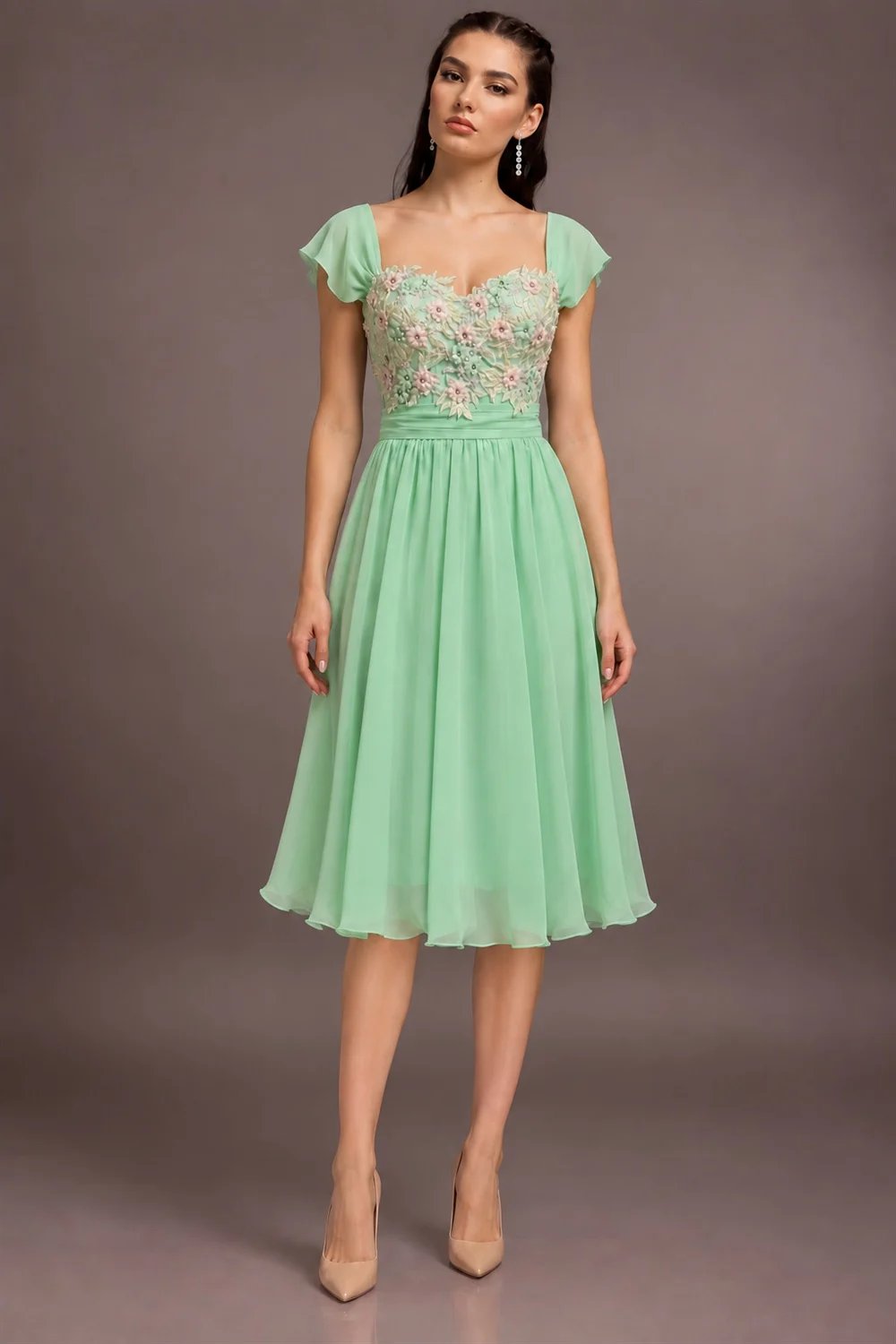
The word ‘satin’ is used loosely, so it is worth reading each dress description carefully. In our catalogue, satin is among the fabrics of the Amour 36 dress: a mint green midi with a bodice embroidered with hand-embellished 3D flowers, a sweetheart neckline, flutter sleeves, a cut-out lace-up back and a flared skirt in fine, silky chiffon. At the time of writing it is available in a size 36, and the current price is on the dress page.
Another option is Amour 69, in powder pink, with a sweetheart bodice decorated with crystal and bead appliqué and an A-line skirt in satin taffeta; the size currently available is 38. Satin taffeta generally has more body than a fluid satin: the skirt holds its volume and the sheen is more discreet. If you want to see the difference, try them on one after the other and watch how the skirts behave as you walk.
How to wear it all evening
Satin’s sheen does the work on its own, so the rest of the look can stay simple. A pair of earrings or a slim bracelet is usually enough. Jewellery with rough edges or hooks can snag the surface threads, so run a finger over each piece before you leave the house.
Underwear matters more than you might think. On a fabric that plays with the light, lines and seams can show through, so choose pieces without thick edges, ideally trying them at the fitting itself, with the dress on. The same goes for your bag: one with a buckle or chain, carried on the arm, will rub the same spot for hours.
Put on your perfume before you dress and wait a few minutes, rather than spraying it directly onto the dress. Alcohol and oils can leave marks on glossy surfaces. The same applies to deodorant and to make-up on your neck: let them dry completely, then ease the dress over your head with care.
How to care for it after the event
If you come home still wearing the dress, take it off as soon as you can and leave it on a broad hanger to air for a few hours. Only then should it go into its cover. Use a breathable garment bag, not a sealed plastic one, which traps moisture.
Don’t rub stains. On satin, rubbing alters the surface and leaves a dull patch that is especially visible in the light. Dab gently with a clean cloth, without pressing, and leave the rest to a specialist. A water mark can leave a ring, so don’t try to wash a spot out yourself, particularly if the dress has embroidery, crystals or several layers. For dresses with appliqué or a mix of fabrics, like the ones above, it is safer to speak directly to someone who has worked with them. Our dress cleaning and pressing service can advise on what suits your dress, depending on its fabrics and details.
When it comes to creases before an event, satin needs a careful hand: too much heat, or an iron pressed directly onto the fabric, can leave a shiny mark. We have written separately about how to steam a dress safely, fabric by fabric, and you will find the steps set out in full there.
Storing it between occasions
On the right hanger, the dress keeps its shape without the shoulders stretching out. If it has thin straps or a heavy bodice, it is sometimes better to hang it from the inner loops rather than the straps, so they don’t stretch. If you are short of space, you can fold the dress with tissue paper between the layers, avoiding tight folds, and air it again before you next wear it.
Keep it away from direct sunlight, which can change the colour, and from the zips and fastenings of other clothes in the wardrobe, which can snag the surface.
Before you decide
If you are considering a dress in satin or another lustrous fabric, bring the shoes and jewellery you plan to wear. Beside the fitting room is where you can best see how everything comes together, and the evening dresses in our showroom can be compared on the spot, side by side. You can book an appointment through the website or by phone, and we look forward to welcoming you at the Alice Design atelier at Calea Moșilor 100.
TO BRING TO YOUR FIRST MEETING
- The images that inspire you, and your questions.
- A sense of the occasion and of what makes you feel comfortable.
- The details you would like to discuss with the atelier.